
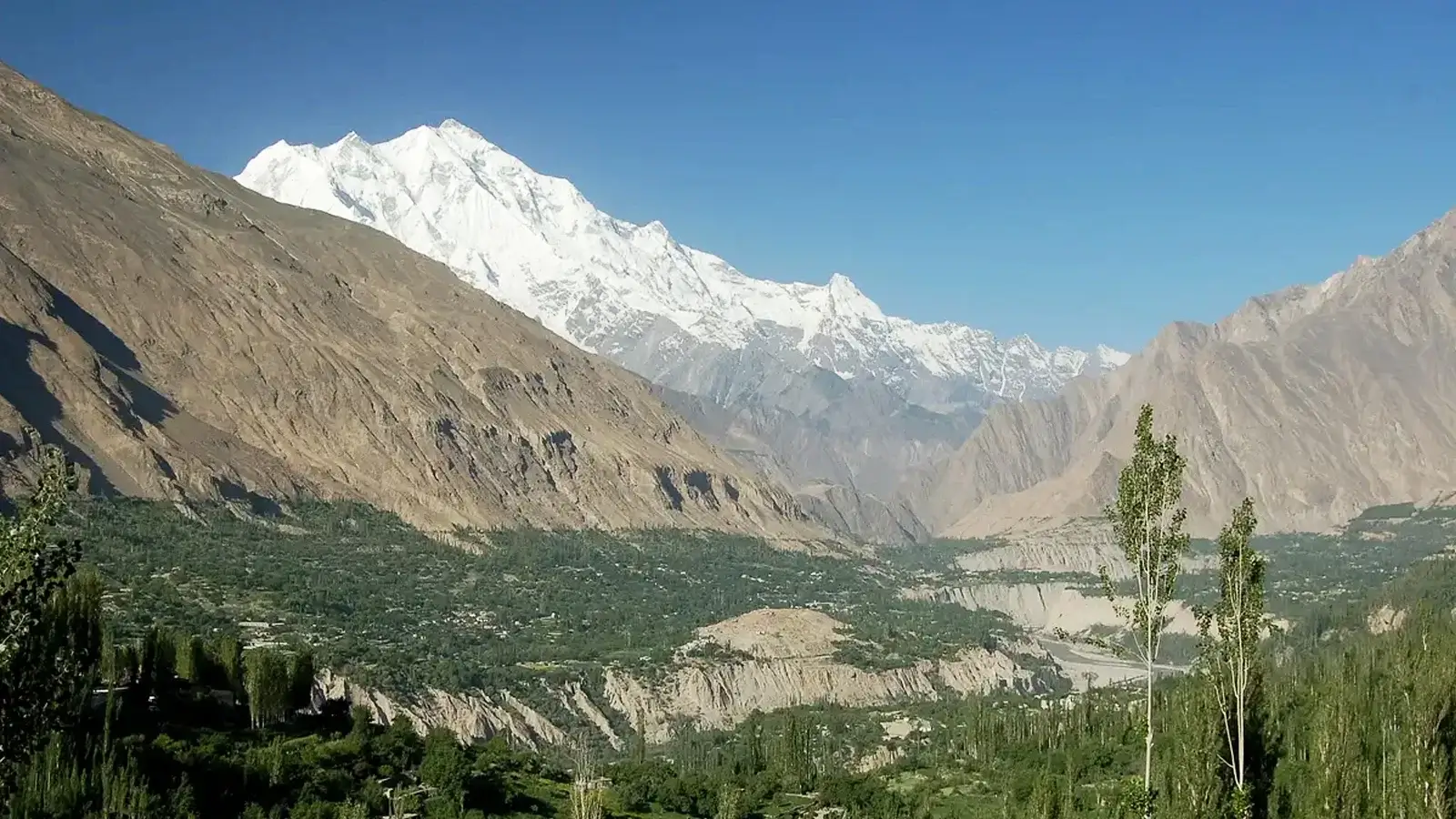
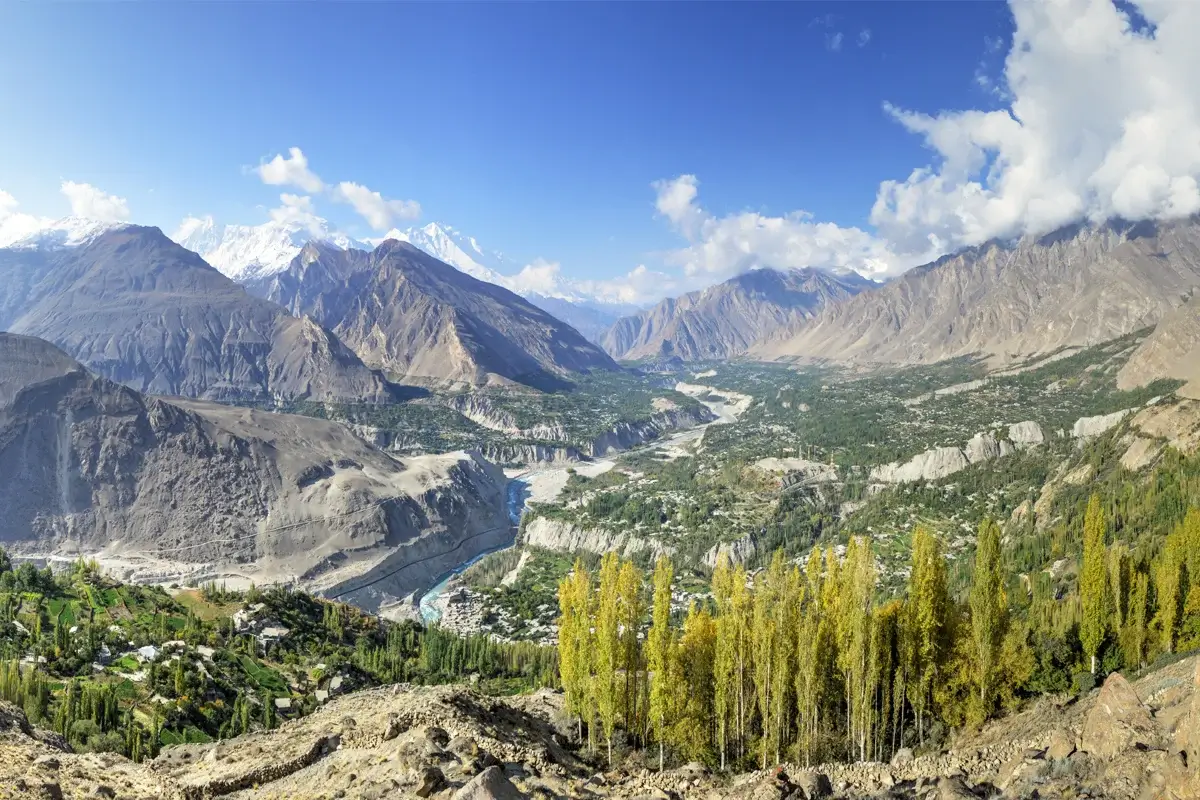
Hunza is a valley in Gilgit-Baltistan, northern Pakistan, sitting between roughly 2,000 and 2,900 metres along the Karakoram Highway. Its main town, Karimabad, is about 100 km north of Gilgit and around 600 km from Islamabad. The valley is known for two forts that predate most of Europe's cathedrals, a lake that did not exist before 2010, and a view of Rakaposhi (7,788 m) that you get from the roadside without walking a step.
Most people arrive with one of three questions: how do you get there, is it safe, and how much will it cost. This guide answers those first, then covers what is actually worth your time once you arrive.
We run guided trips through this valley roughly 120 times a season, so the numbers below come from our own booking records rather than from other websites.
Quick answer
Getting there: 15–16 hours by road from Islamabad on the Karakoram Highway, or a 1-hour flight to Gilgit followed by a 2.5–3 hour drive.
Best time: April for blossom, June to September for clear passes, mid-to-late October for autumn colour.
Time needed: 5 days minimum, 7 is comfortable.
Permits: no NOC for Hunza itself; foreigners need one for some adjacent restricted areas.
Cost: roughly USD 650 per person for a week, guided, mid-range.
Key facts
The numbers that decide most Hunza itineraries, in one place.
| Region | Gilgit-Baltistan, Pakistan |
| Main town | Karimabad, also called Baltit |
| Elevation, Karimabad | ~2,500 m |
| Elevation, Khunjerab Pass | 4,693 m |
| Distance from Islamabad | ~600 km via Karakoram Highway |
| Drive time from Islamabad | 14 to 18 hours, usually split over 2 days |
| Nearest airport | Gilgit (GIL), ~100 km / 2.5 to 3 hours |
| Languages | Burushaski (central Hunza), Wakhi (Gojal), Shina, Urdu |
| Currency | Pakistani Rupee (PKR) |
| Mobile coverage | Reasonable in Karimabad, patchy north of Gulmit |
| Khunjerab Pass season | Typically open April to November, closed in winter |
| Best blossom window | Late March to mid-April, varies year to year |
Last verified: 13 August 2026 · Source: Pakistan Tour Maker operational records
How do you get to Hunza?
Two realistic routes, and they suit different travellers.
By road, the Karakoram Highway. Islamabad to Karimabad is 14–18 hours of driving. Almost nobody does it in one push. The standard split is Islamabad to Chilas on day one, roughly 10–12 hours, then Chilas to Karimabad on day two, 5–6 hours. Chilas is a functional overnight stop, not a destination -- you arrive after dark and leave after breakfast.
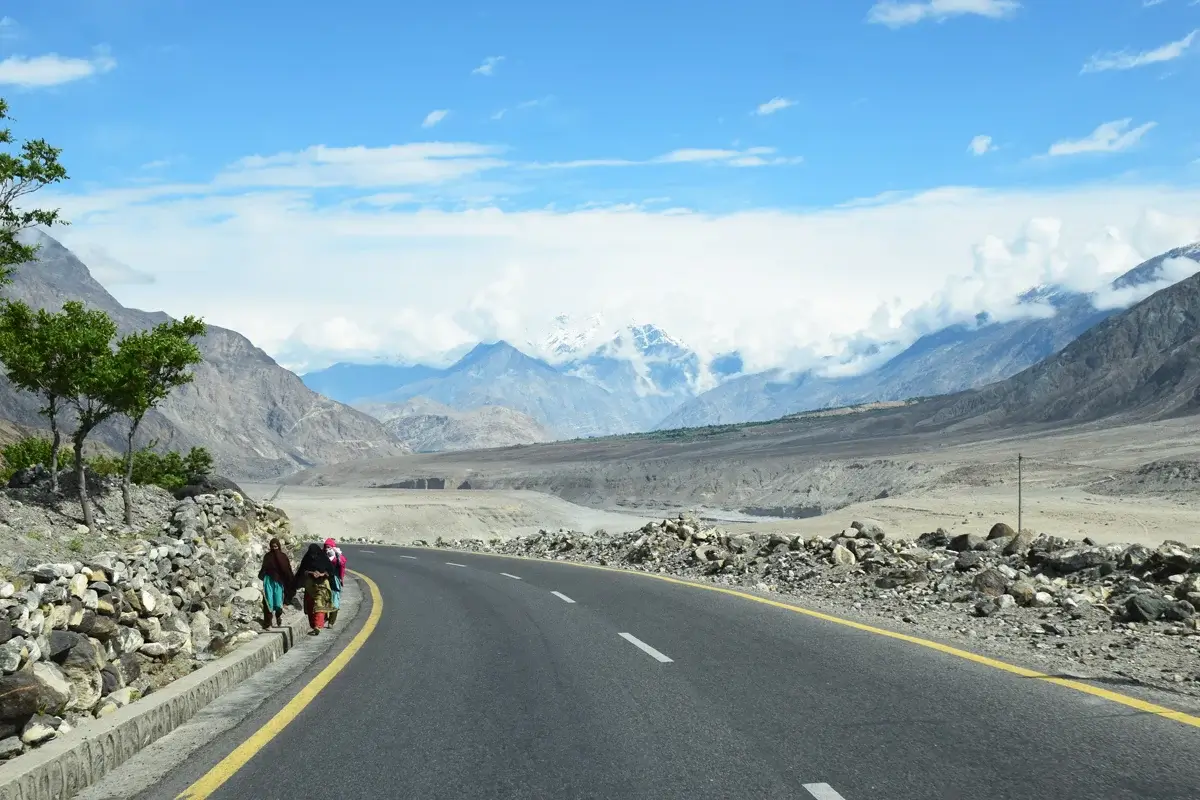
The road itself is the reason to choose this option. You pass the Nanga Parbat viewpoint, the Indus-Gilgit confluence, and the point where three mountain ranges meet. If the highway is the trip for you, drive it.
By air. PIA operates ATR flights from Islamabad to Gilgit. The flight is about an hour and, in clear weather, one of the more spectacular short hops anywhere -- you fly level with Nanga Parbat. From Gilgit it is 2.5–3 hours by road to Karimabad.
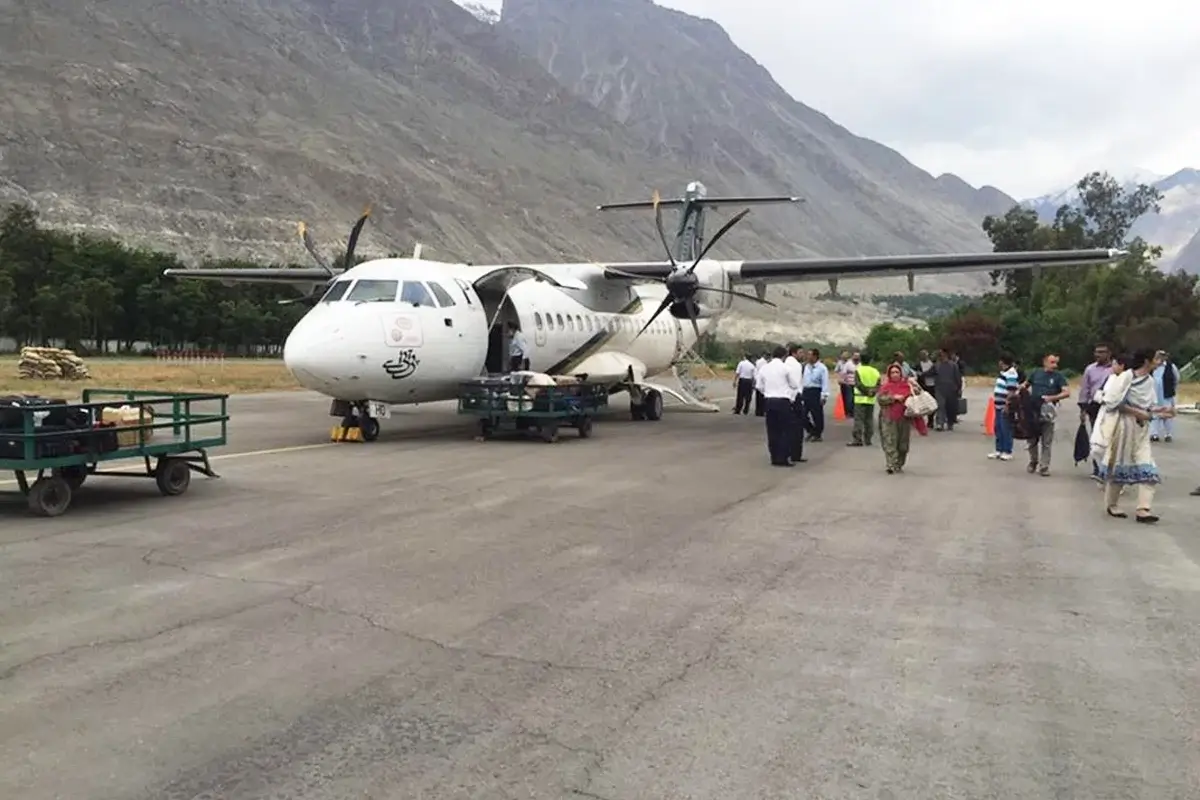
The catch is reliability. These flights are visual-approach only and cancel in poor visibility. In our own records, around 50% of departures are cancelled or delayed. Anyone flying should hold a road contingency and not book a same-day international connection on the way out.
Which to pick. If you have 7+ days, drive up and fly back -- you see the highway once and save two days. If you have 5 days or less, fly both ways and accept the weather risk.
What does it cost to visit Hunza?
Per person, in USD, updated as of 18 August 2026.
| Item | Budget | Mid-range | Comfortable |
|---|---|---|---|
| Accommodation per night | $22 | $32 | $85 |
| Meals per day | $3 | $10 | $12 |
| Private 4x4 with driver, per day | $27 | $30 | $32 |
| Islamabad–Gilgit flight, one way | $82 | $82 | $82 |
| Licensed guide, per day | $25 | $25 | $32 |
| 7-day guided total, per person | $650 | $850 | $1,350 |
Two things travellers routinely underestimate. First, transport is the largest line item, not hotels -- distances are long and roads are slow. Second, ATMs in Hunza are unreliable and card acceptance outside larger hotels is close to nil. Bring cash from Gilgit or Islamabad.
When is the best time to visit Hunza?
| Period | Conditions | Worth knowing |
|---|---|---|
| Late Mar–mid Apr | Blossom. Cool, 5–18°C | The valley turns pink and white. Dates shift 1–2 weeks yearly with the winter |
| May | Green, quiet, good light | Khunjerab may still be closed |
| Jun–Aug | Warm, everything open | Peak domestic season. Book hotels well ahead |
| September | Clear skies, thinning crowds | Our own preference for photography |
| Mid–late Oct | Autumn colour, cold nights | Short window, roughly two weeks |
| Nov–Feb | Cold, some hotels closed | Passes closed. For winter specialists only |
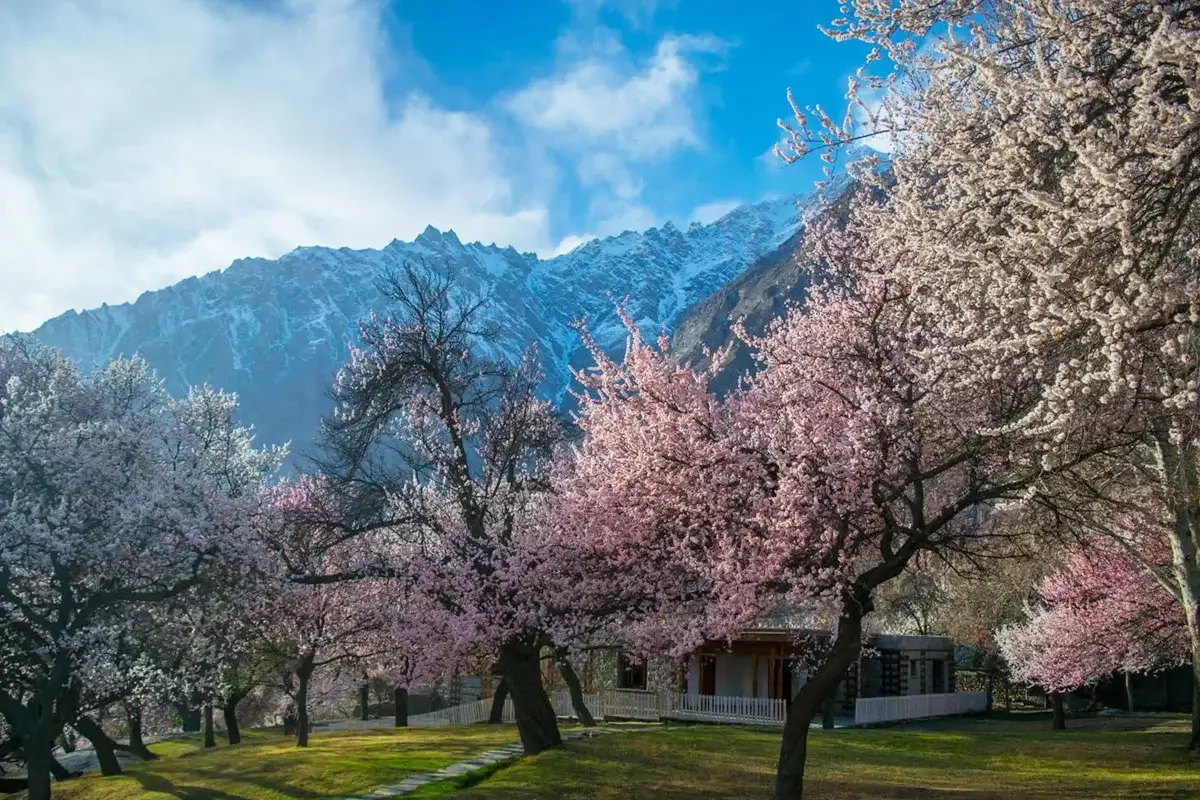
Blossom is the hardest to time. It follows the winter, not the calendar, so a fixed booking three months out is a gamble. If blossom is your reason for coming, build two flexible days into the plan.
Cherry blossom season in Hunza
How many days do you need in Hunza?
| Days | What is realistic |
|---|---|
| Three | Karimabad, both forts, Attabad Lake, Passu Cones. Rushed, and you will spend most of it in a vehicle. |
| Five | The above plus Khunjerab Pass, Eagle's Nest at sunrise, and a proper day in Gojal. The sensible minimum. |
| Seven | Adds Nagar Valley and Hopper Glacier, a short trek, and enough slack for a weather day. Most people who come for seven days say they would have taken nine. |
| Ten or more | Hunza combined with Naltar, or extended into Skardu. |
Independent of route, add one buffer day if you fly. Weather cancellations are common enough that a tight itinerary will eventually break.
What is actually worth seeing in Hunza?
Ordered by how often our guests say it was the highlight, not by how often it appears on other websites.
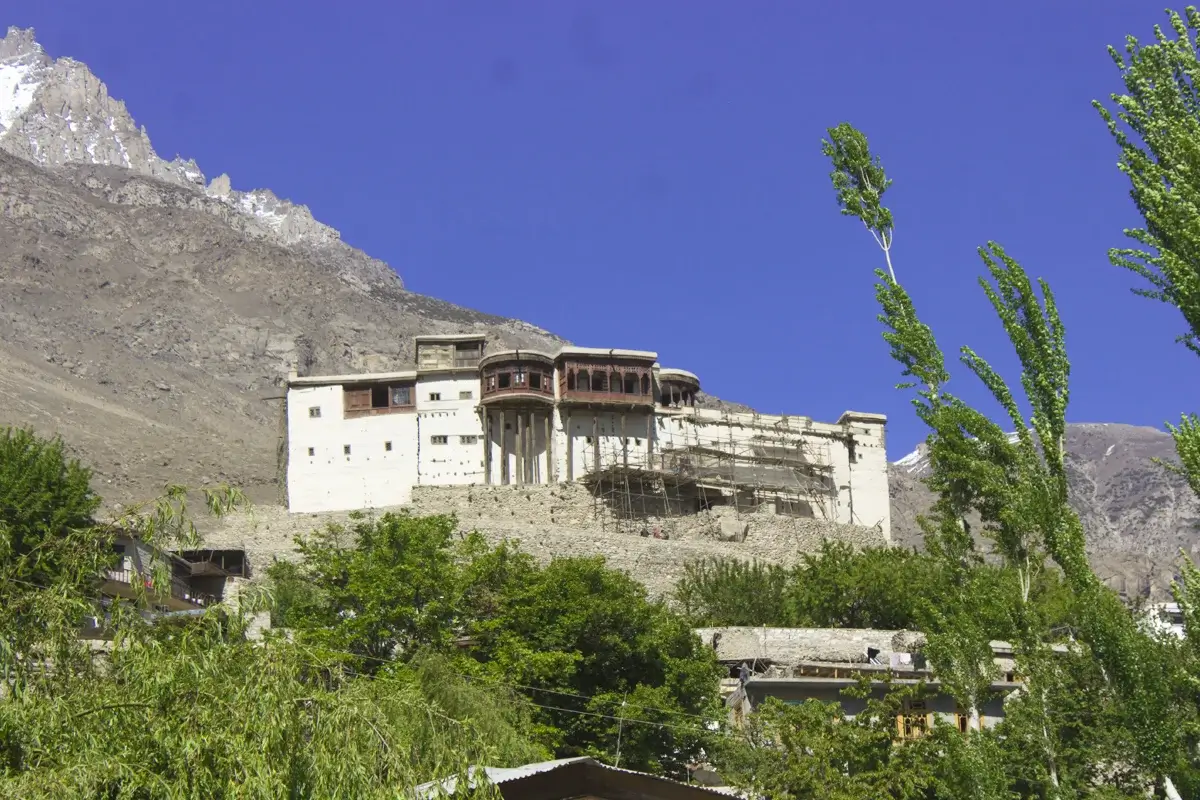
Baltit Fort, Karimabad. Around 700 years old, the seat of the Mirs of Hunza, restored by the Aga Khan Trust for Culture in the 1990s. The guided tour runs about 45 minutes and is genuinely good. Go in the morning before the tour buses.
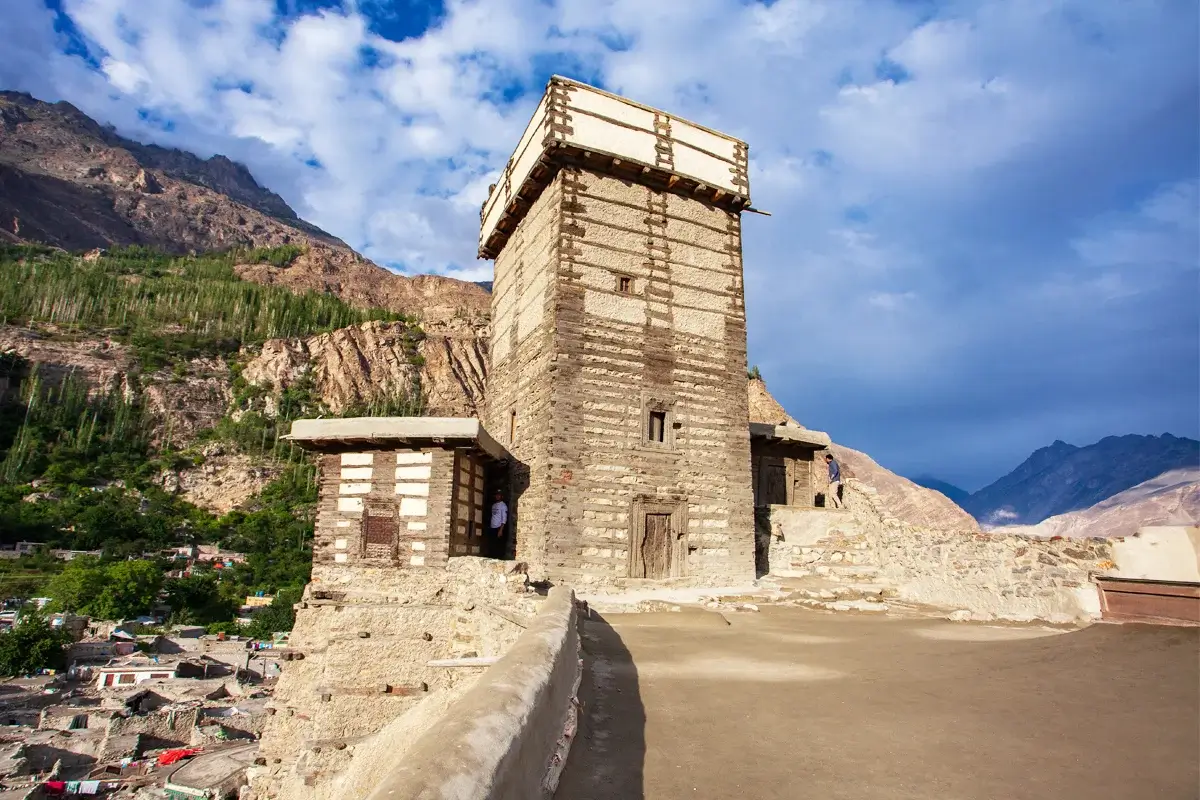
Altit Fort. Roughly 1,100 years old -- older than Baltit, smaller, and in our view the more atmospheric of the two. The restored village lanes around it are worth the walk. Most day-trippers skip it, which is exactly why you should not.
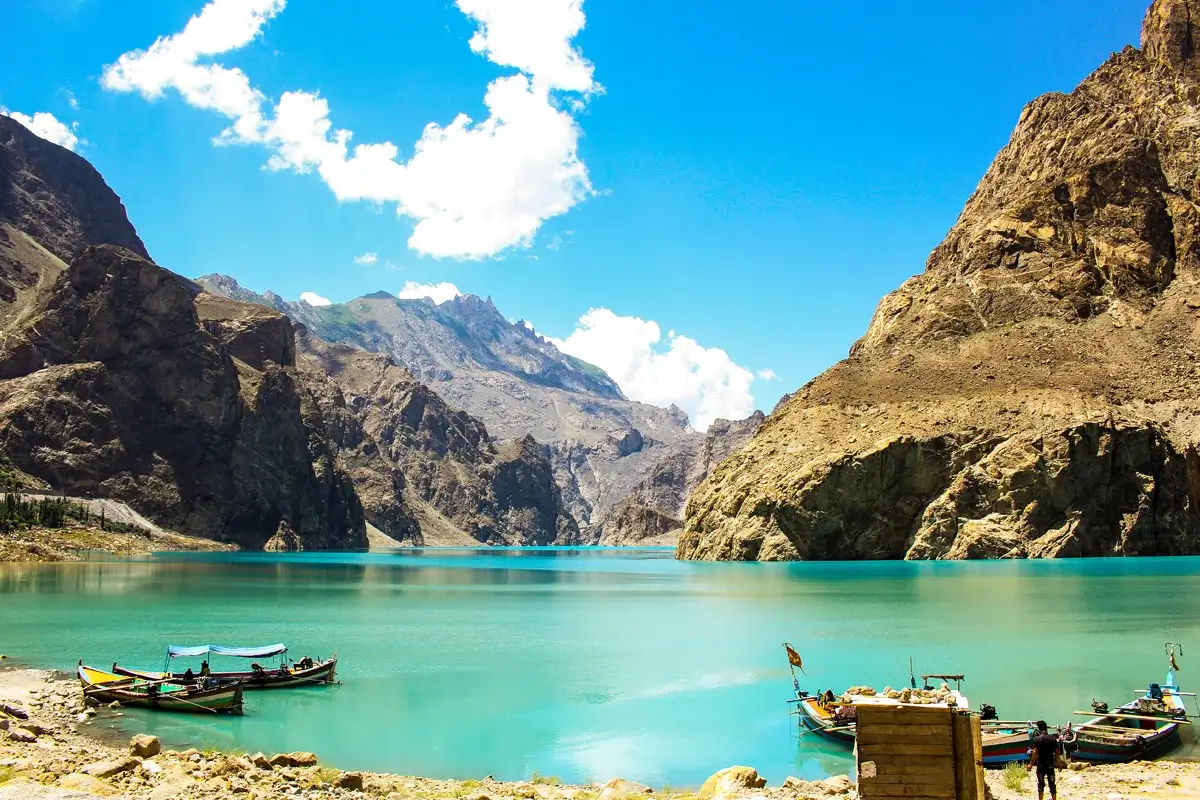
Attabad Lake. Formed in January 2010 when a landslide dammed the Hunza River, submerging villages and a section of the Karakoram Highway. The colour is real, not a filter. The boat rides are fine; the jet-skis are noise. What makes the lake worth stopping for is the story, so get someone to tell it to you properly.
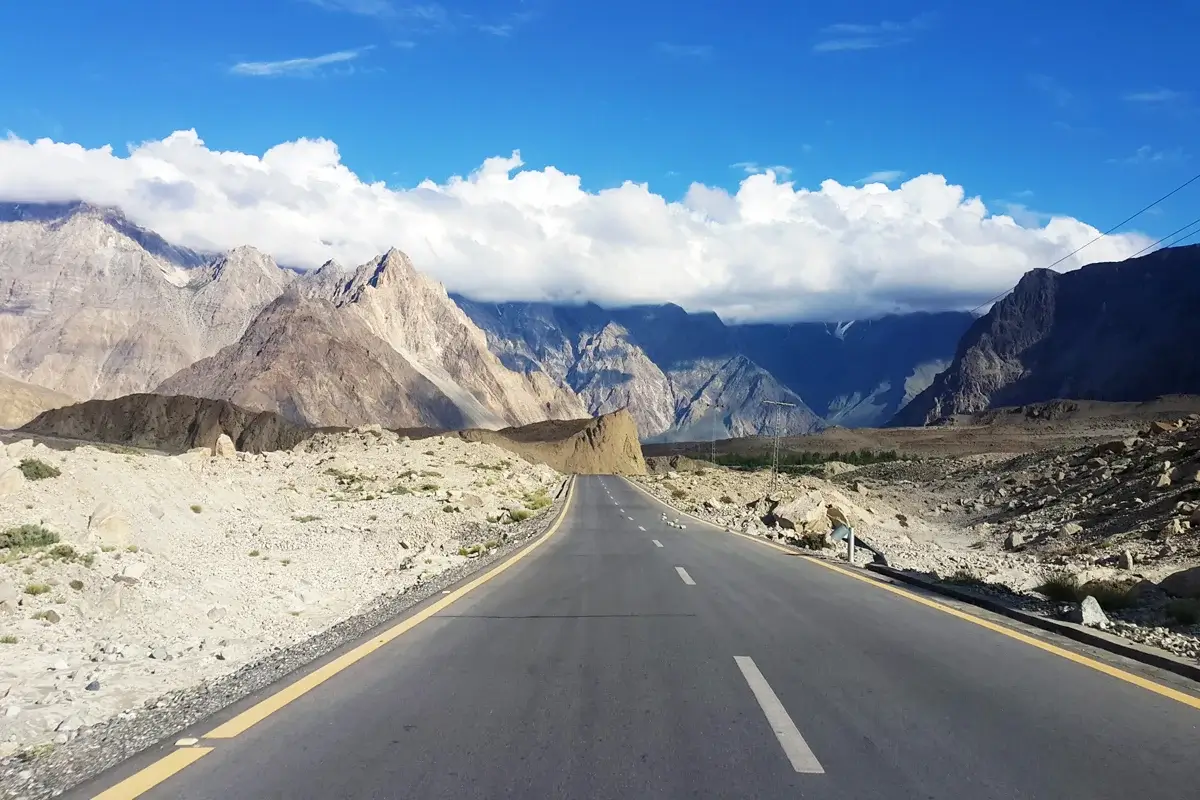
Passu Cones. The serrated ridgeline you have seen on every Pakistan tourism poster. It photographs best in early morning light from the roadside near Passu village.
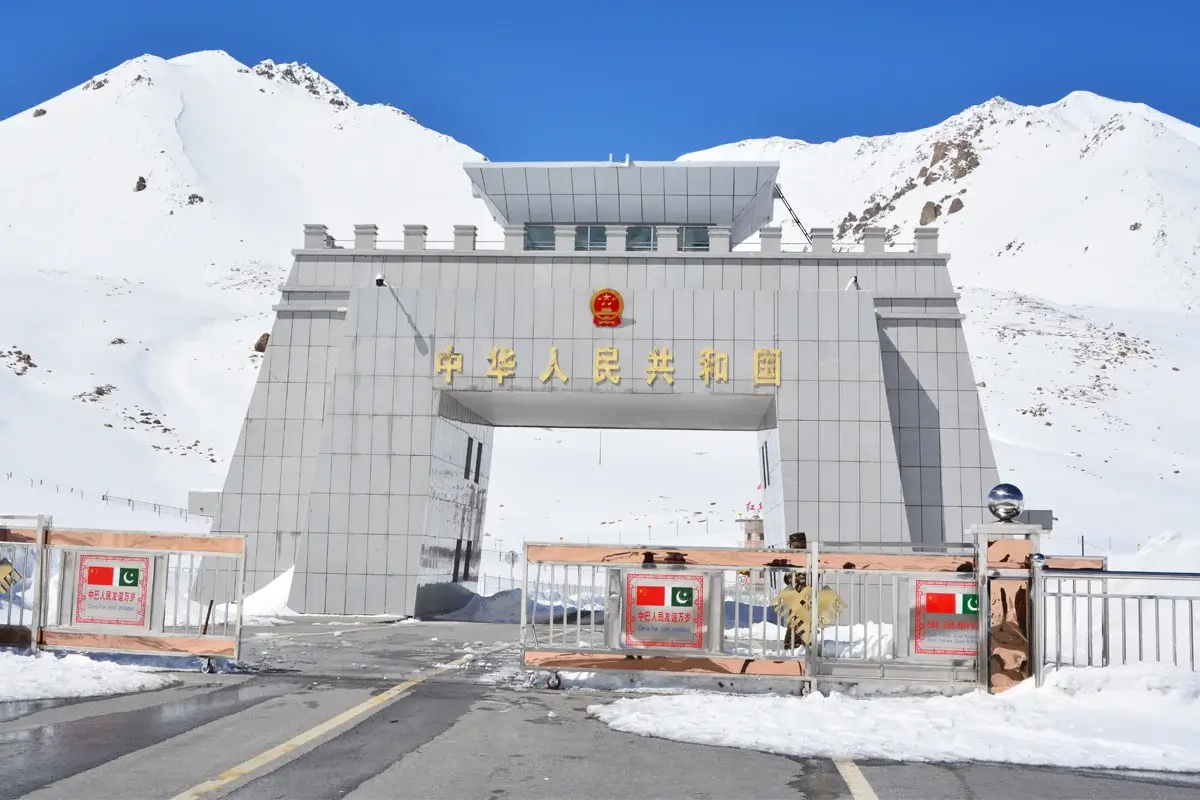
Khunjerab Pass, 4,693 m. The Pakistan–China border and the highest paved international crossing in the world. It is a four-hour drive each way from Karimabad for a photograph at a gate and thin air. Some guests rate it the best day of the trip; others find it a long drive for a signpost. Decide honestly which you are.
Eagle's Nest, Duikar. Sunrise over Rakaposhi, Ultar, and Ladyfinger Peak. This means leaving Karimabad around 5 am in the dark. It is the one early start nobody regrets.
Hussaini suspension bridge. Photogenic, structurally fine, and considerably less terrifying than the internet suggests. Twenty minutes, not an afternoon.
Rakaposhi View Point, Ghulmet. A roadside stop on the drive up where a 7,788 m peak rises directly in front of you. Have chai. Do not rush it.
What tends to disappoint
Being straight with you saves everyone time.
Khunjerab disappoints anyone who does not enjoy long drives. Attabad disappoints in flat midday light, so go early or late. And Karimabad in peak August is busy in a way that surprises people who imagined an empty mountain valley.
Is Hunza safe for tourists?
Hunza is among the safer parts of Pakistan for visitors, including solo travellers. Violent crime against tourists is rare, the valley has high literacy and a strong local hospitality culture, and the community itself has a direct economic interest in visitors being fine.
The genuine risks are environmental, not human:
- Roads. Rockfall and landslides close sections of the Karakoram Highway, particularly in spring melt and after heavy rain. Build slack into your schedule.
- Altitude. Khunjerab at 4,693 m affects people who felt fine at 2,500 m.
- Medical facilities. Basic in Karimabad; serious cases go to Gilgit or are evacuated. Carry your own first-aid kit and any prescription medication.
- Winter. Cold, closures, limited services.
Check your own government's current travel advisory before booking. The UK FCDO, US State Department and Australian Smartraveller pages are updated regularly and their assessments differ from each other. Read the region-specific detail rather than the headline.
Do foreigners need a permit for Hunza?
Hunza itself does not require an NOC. A valid Pakistani visa is sufficient for Karimabad, Attabad, Gojal, Passu, and the drive to Khunjerab Pass.
You will pass police check posts and be asked to register. Carry your passport and several photocopies of the photo page and visa -- handing over a copy is faster than waiting for someone to write out your details by hand.
Some adjacent restricted areas do require a No Objection Certificate, and requirements change. In our recent experience an NOC takes 5 working days when applied for through a licensed operator. We handle this for our guests as part of the booking.
Will altitude be a problem?
Karimabad at 2,500 m affects very few people. The issue is the day trip to Khunjerab, which takes you from 2,500 m to 4,693 m and back inside about ten hours.
What helps: spend at least two nights in Hunza before attempting the pass, drink considerably more water than feels necessary, skip alcohol the night before, and treat the pass as a short stop rather than a picnic. Twenty to thirty minutes at the top is plenty.
Headache, nausea, and breathlessness at the pass are common and usually resolve on descent. If symptoms are severe or include confusion or loss of coordination, descend immediately -- that is not something to negotiate with. Anyone with a cardiac or respiratory condition should speak to their doctor before booking a trip that includes Khunjerab.
Where should you stay in Hunza?
Karimabad works as a base for almost every itinerary -- it is central, has the best selection of hotels, and puts both forts within walking distance. Stay in Gojal (Gulmit or Passu) only if you want to be closer to Khunjerab and prefer quiet over convenience.
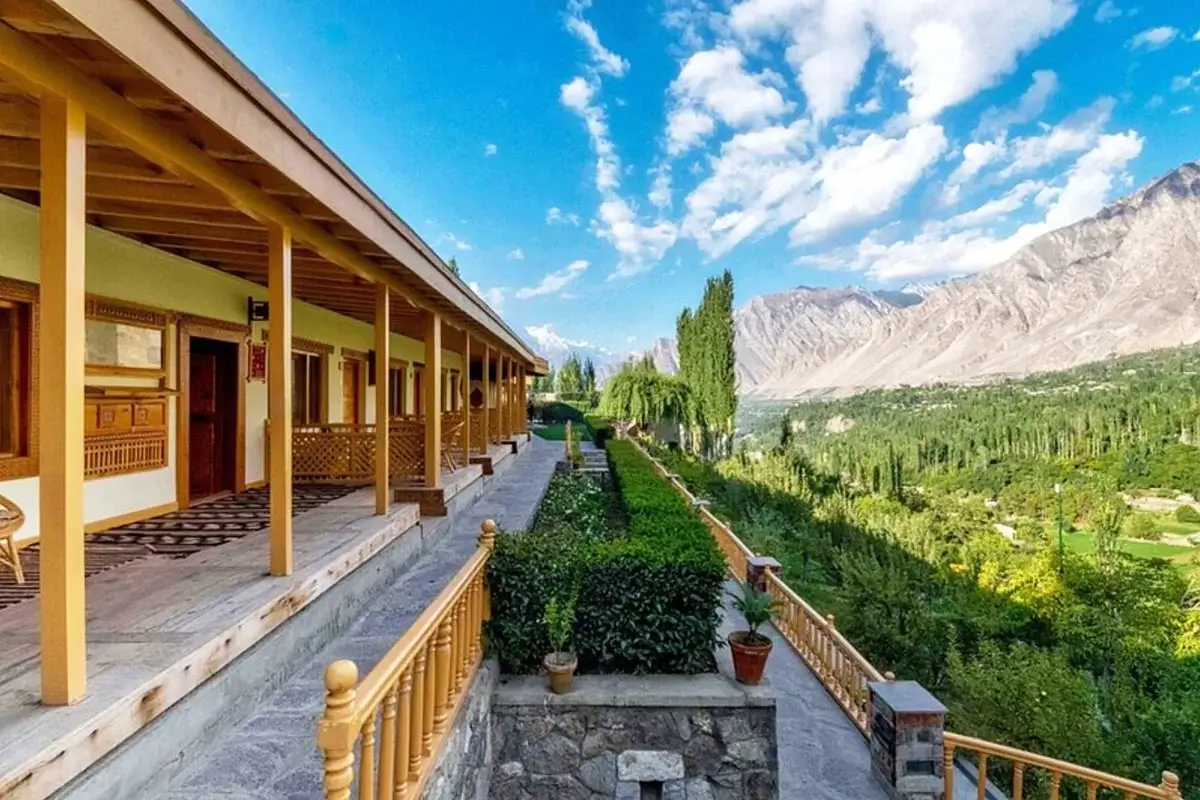
Two practical points. Hotels facing Rakaposhi cost more and are worth it. And in July and August, the good places in Karimabad book out weeks ahead with domestic travellers -- this is not a valley where you improvise accommodation in peak season.
Where to stay in Hunza -- hotels by budget
What is the food like?
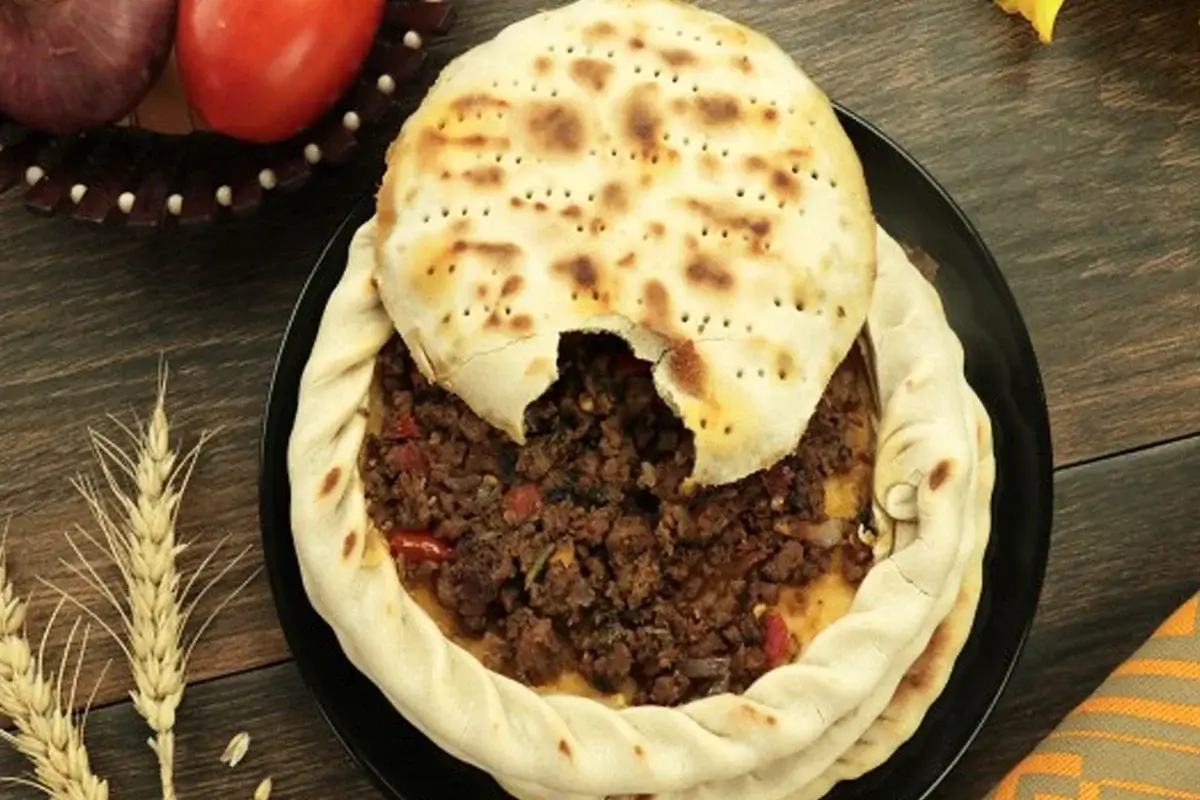
Local Hunza cuisine is distinct from the rest of Pakistan -- less oil, more wheat, apricot, walnut, and dairy. Chapshuro (a filled meat pastry), harissa, and apricot soup are the dishes worth seeking out. Karimabad has a handful of restaurants doing proper local food alongside the standard tourist menu of biryani and karahi.
Vegetarians manage well. Travellers with coeliac disease or severe allergies will find it harder -- tell us in advance and we brief the hotels. Apricots are the valley's signature crop. Dried apricots, apricot oil, and apricot kernels are sold everywhere and make better souvenirs than the fridge magnets.
Phone, internet, and money
SIM. Foreign nationals can buy a local SIM with passport and visa; the process is easier in Islamabad or Gilgit than in Hunza. Jazz and Zong have the best northern coverage.
Signal. Reasonable in Karimabad. Intermittent in Gojal. Effectively absent on the road to Khunjerab.
Internet. Most hotels in Karimabad have Wi-Fi. Speeds are adequate for messaging, not for video calls.
Money. Bring cash. ATMs in Karimabad exist but are unreliable and frequently out of service. Cards are accepted at larger hotels and nowhere else. Withdraw in Gilgit or Islamabad.
What should you pack?
Layers, regardless of season. Karimabad can be 25°C at midday and 8°C at night, and Khunjerab is colder than anywhere else you will go.
Non-obvious but genuinely useful: a power bank (outages happen), motion sickness tablets for the mountain roads, sunscreen at high UV rating, a headtorch, and any prescription medication in sufficient quantity -- pharmacies in Karimabad are basic.
For women travellers, modest dress is expected and appreciated. A shawl or scarf covers most situations. Hunza is more relaxed than much of Pakistan, but visitors who dress respectfully are treated noticeably better.
Hunza or Skardu -- which first?
Hunza if it is your first trip to northern Pakistan. It is easier to reach, has more to see per kilometre driven, and the infrastructure is better developed.
Skardu rewards a second visit, or a first visit if you are specifically after Deosai, the Shigar and Khaplu valleys, or a serious trek.
Doing both properly needs ten days minimum. Attempting both in a week means spending most of the week in a vehicle.
Hunza vs Skardu -- which should you visit first? · Skardu travel guide
Frequently asked questions
Is Hunza safe for solo female travellers?
Yes, and it is one of the more comfortable parts of Pakistan for solo women. Standard precautions apply: modest dress, avoid travelling between towns after dark, and share your itinerary with someone. Many solo women travel the valley independently without incident.
Can I visit Hunza without a guide?
Yes. Hunza requires no guide by law and independent travel is entirely feasible. A guide adds most value on the fort tours, at Attabad where the story is not on any signboard, and in handling check posts and logistics.
How cold does it get?
Karimabad ranges roughly 5–18°C in April, 15–30°C in summer, and below freezing at night from November. Khunjerab is 10–15°C colder than Karimabad on any given day.
Is the Karakoram Highway dangerous to drive?
It is a well-surfaced road with steep drops, blind corners, and occasional rockfall. It is not dangerous with an experienced driver in daylight. Do not attempt night driving, and do not self-drive on a first visit.
Can I cross into China at Khunjerab?
Only with a Chinese visa arranged in advance and only when the border is open to third-country nationals -- status changes and should be confirmed close to travel. Most visitors go to the pass and turn around.
Is there mobile signal at Khunjerab Pass?
Effectively none. Tell people at home you will be off-grid for the day.
Does Hunza get snow?
Yes, from roughly November to March. Karimabad is accessible in winter; Khunjerab and the higher valleys are not.
Is Hunza suitable for children or older travellers?
Yes, with adjustments. The forts involve stairs and uneven ground, and Khunjerab is a long day at altitude that many families choose to skip. Everything else is accessible by vehicle with short walks.
Ready to visit?
We run guided trips through Hunza from 3 to 12 days, with airport transfers, licensed English-speaking guides, verified hotels, and permit handling included. Prices shown in USD and PKR.
See Hunza tour packages, prices and dates Message us on WhatsApp
Related reading: Cherry blossom season in Hunza · Hunza vs Skardu: which first? · Where to stay in Hunza
Last updated: 17 August 2026 · Verified by the Pakistan Tour Maker team.
Pakistan Tour Maker is the international division of Click Pak Tourism Services, a Government of Pakistan licensed tour operator (Licence No. 9780), operating since 2013.