
Fairy Meadows: The Access, the Walk, and What It Costs
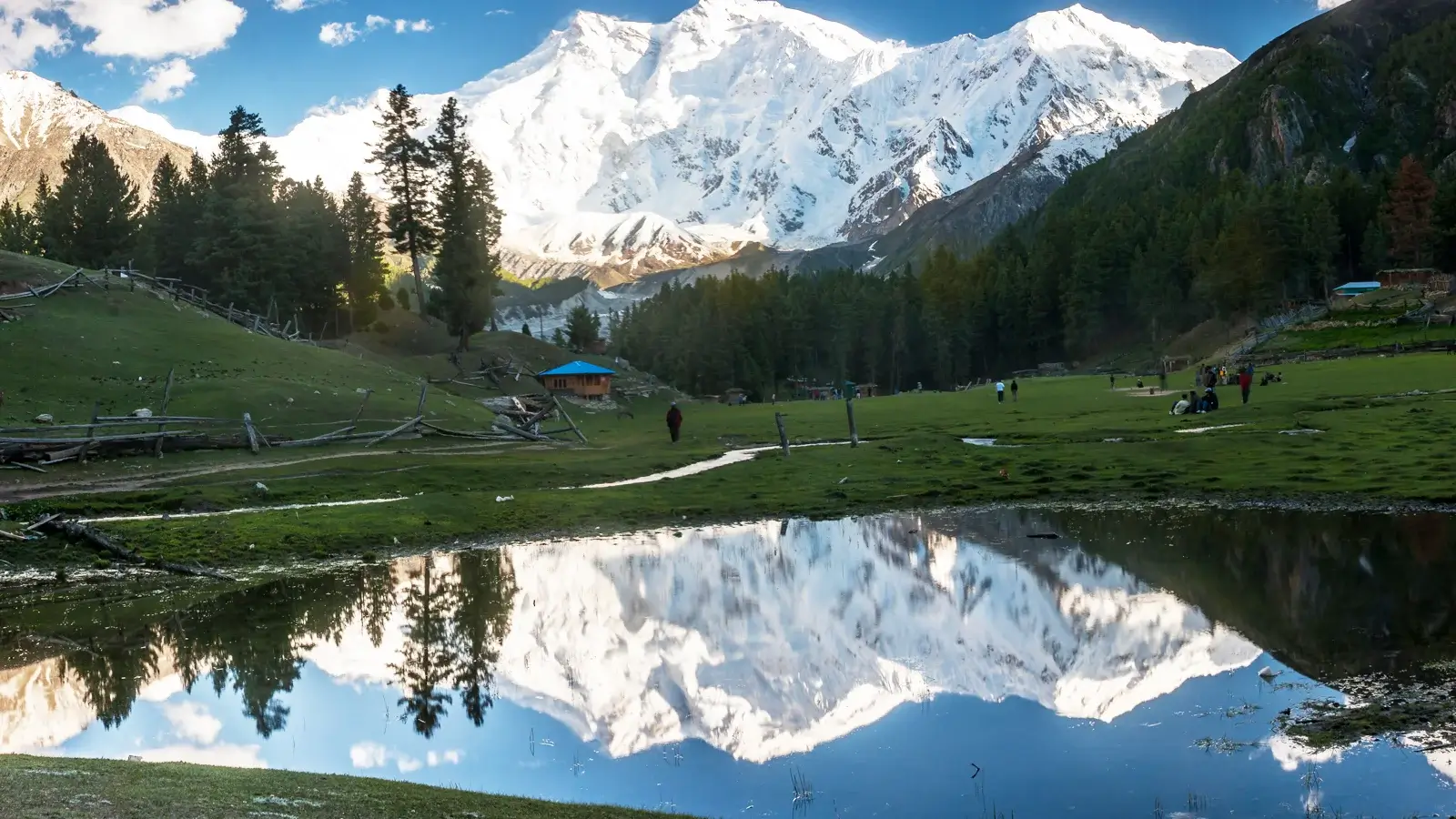
Fairy Meadows is an alpine meadow at roughly 3,300 metres in Diamer district, Gilgit-Baltistan, facing the Raikot face of Nanga Parbat. At 8,126 metres, Nanga Parbat is the ninth-highest mountain in the world, and from the meadow it fills the whole southern sky.
There is no road to Fairy Meadows. That single fact shapes every trip here. You leave the Karakoram Highway at Raikot Bridge, take a jeep up a narrow unpaved track to the village of Tato, and then walk the rest.
Most of what gets asked about this place is the access rather than the view, so that is what this page covers first. We run trips here roughly 25 to 35 times a season, and the fares and timings below come from our own records.
Quick answer
Getting there: 10 to 11 hours from Islamabad to Raikot Bridge, then a 1 to 1.5 hour jeep ride to Tato, then a 2 to 3 hour walk.
The walk is compulsory. No vehicle reaches the meadow, though you can hire a horse if you would rather not walk.
The jeep: around PKR 20,000 per vehicle, fixed by the local drivers' association. You cannot use your own car.
Season: roughly May to September.
Days needed: 2 nights minimum, 3 if you want the Nanga Parbat viewpoint.
Cost: from USD 400 per person for a 5-day guided trip from Islamabad, minimum two travellers.
Key facts
The numbers that decide most Fairy Meadows trips, in one place.
| Region | Diamer District, Gilgit-Baltistan |
| Elevation, Fairy Meadows | ~3,300 m |
| Elevation, Beyal Camp | ~3,500 m |
| Elevation, Nanga Parbat viewpoint | ~4,000 m |
| Nanga Parbat height | 8,126 m, ninth highest in the world |
| Access point | Raikot Bridge on the Karakoram Highway |
| Jeep stage | Raikot Bridge to Tato, 10 to 12 km, 1 to 1.5 hours |
| Jeep fare | Around PKR 20,000 per vehicle, fixed rate |
| Walking stage | Tato to Fairy Meadows, 3 to 4 km, 2 to 3 hours uphill |
| Horse or porter from Tato | Around PKR 10,000 |
| Drive from Islamabad to Raikot Bridge | 10 to 11 hours |
| Season | Roughly May to September |
| Mobile coverage | None at the meadow |
| Electricity | Generator or solar only, limited hours |
| Permits | Not required for Pakistani nationals |
Last verified: 20 August 2026 · Source: Pakistan Tour Maker operational records
How do you get to Fairy Meadows?
Three stages, and each one is a different kind of travel.
Stage one: Islamabad to Raikot Bridge
Up the Karakoram Highway past Besham and Chilas, around 11 hours. Most trips break this over two days with a night at Chilas or Naran. Raikot Bridge is a marked turn-off on the KKH, not a town, so do not expect facilities beyond a few tea stalls.
Stage two: the jeep track to Tato
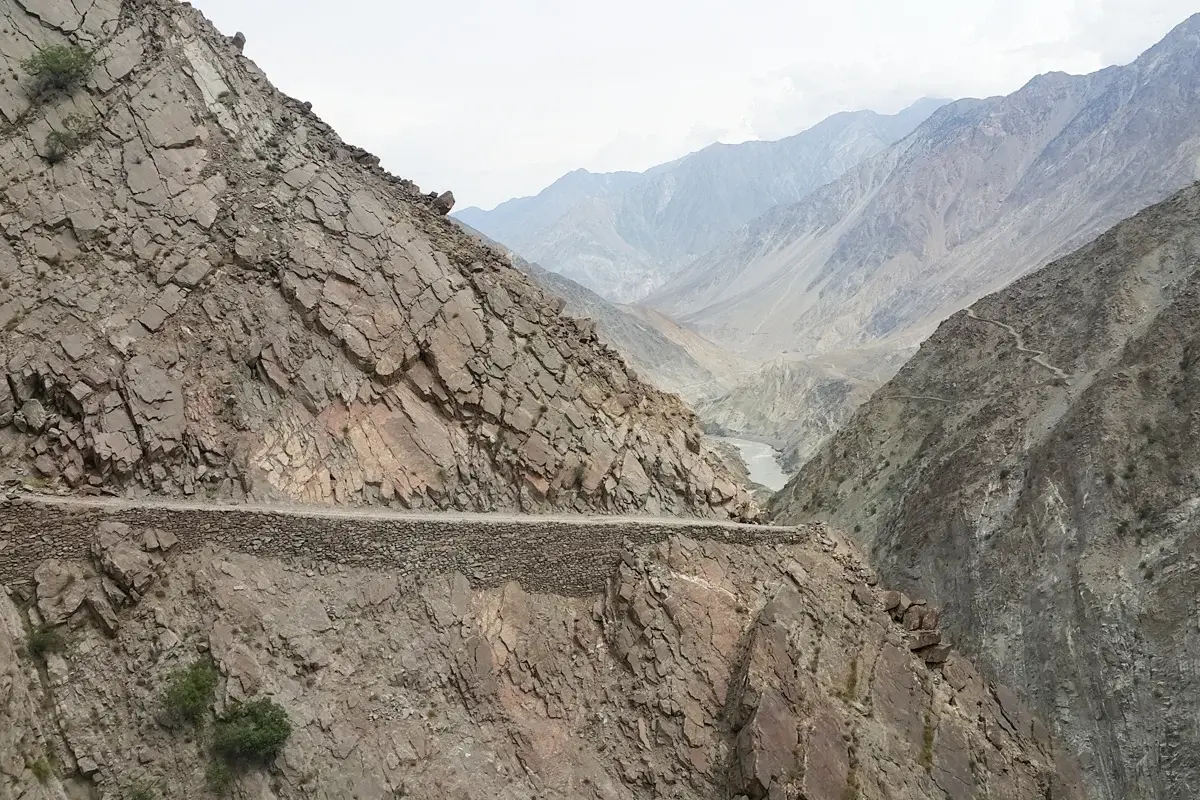
Roughly 10 to 12 km of unpaved track, one to one and a half hours. It climbs steeply, it is narrow, and there are unprotected drops. Only local drivers from the Tato association operate it, at a fixed fare of around PKR 20,000 per vehicle. You cannot take your own vehicle, and this is not negotiable.
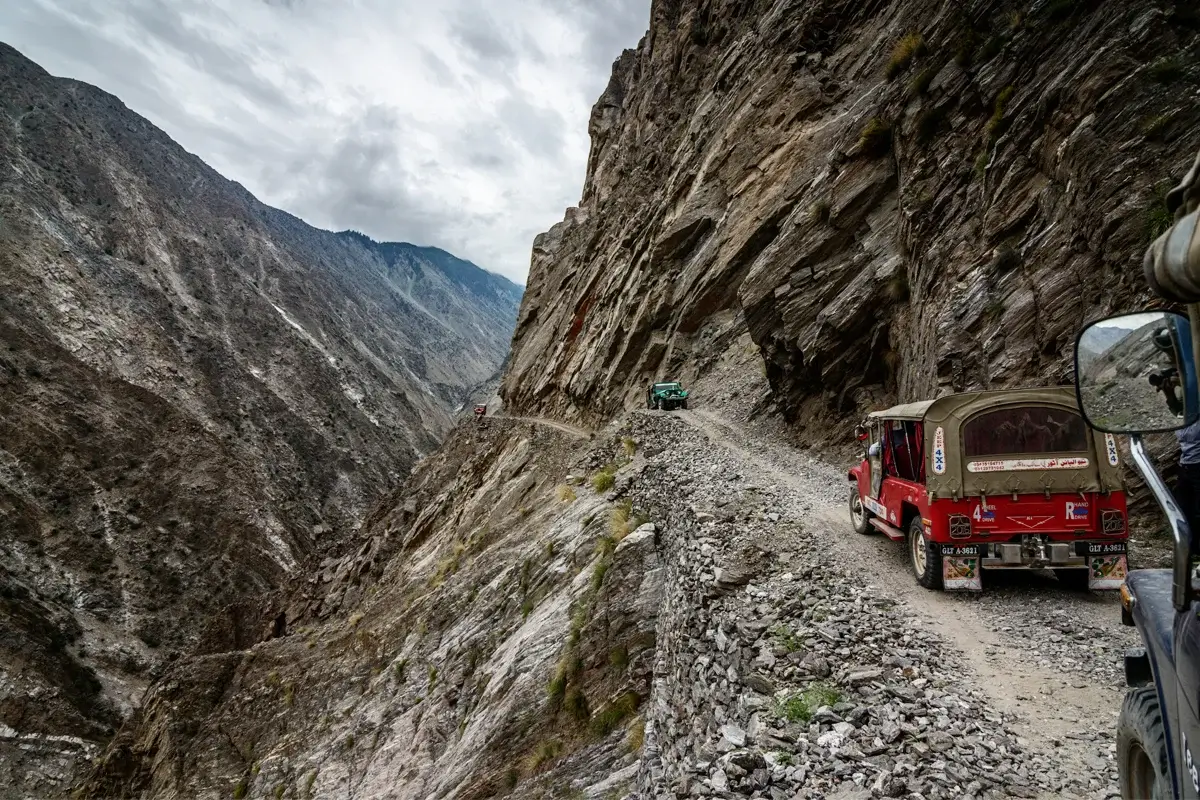
Be prepared for this stage. It frightens a proportion of visitors and there is no polite way to say otherwise. The drivers do it several times a day, every day of the season, and the safety record is good. But if heights or exposure genuinely distress you, sit on the inside and do not look down.
The fare is per vehicle, not per person, so what you pay each depends entirely on group size. It is included in our packages, which means you are not negotiating at the bridge.
Stage three: the walk from Tato
Three to four kilometres of footpath through pine forest, climbing steadily. Two to three hours depending on pace and fitness. Horses and porters are available at Tato at around PKR 10,000 if you would rather not carry a pack or walk the whole way.
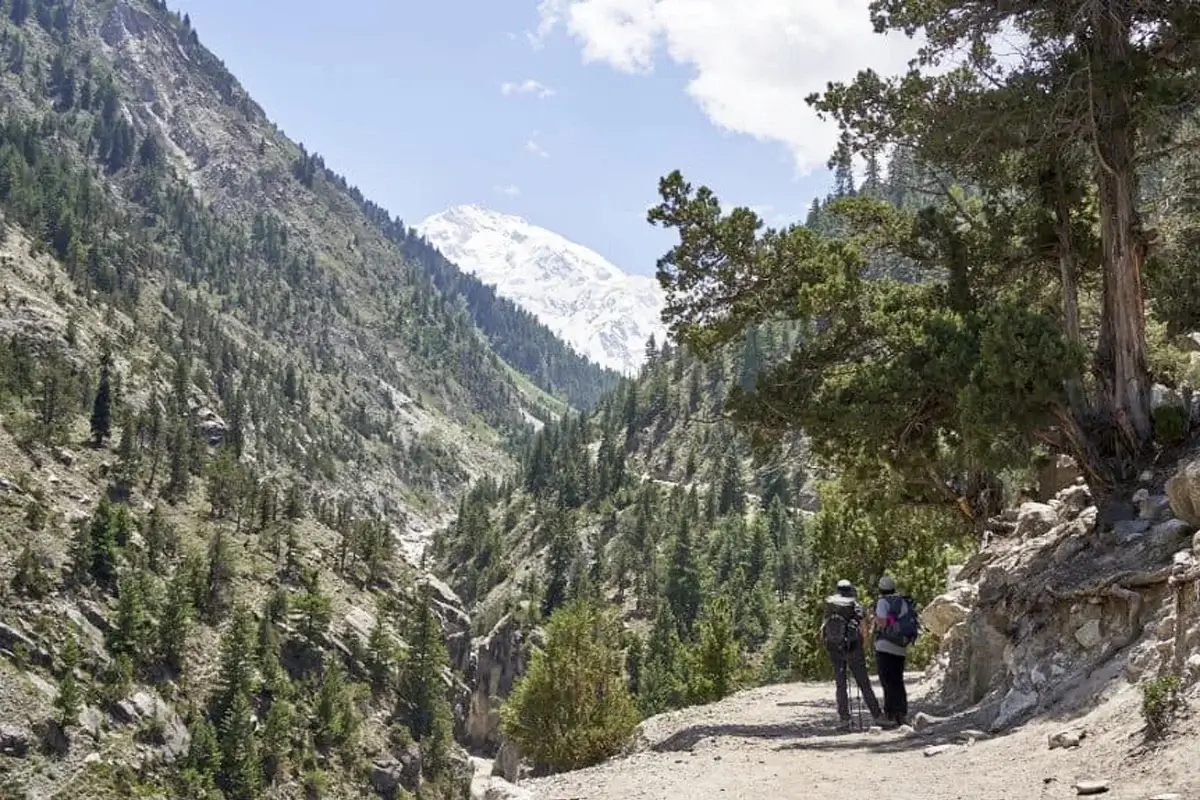
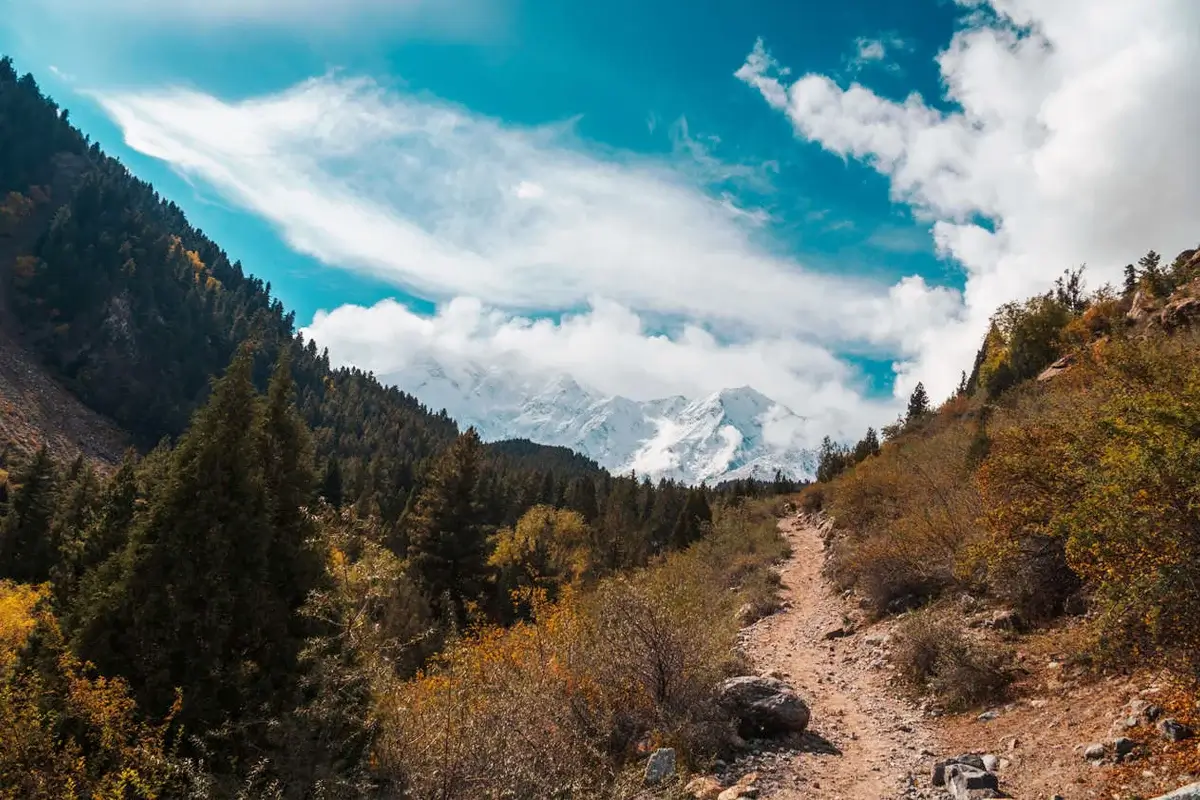
There is no road to the meadow and there will not be one. Anyone who cannot manage two to three hours of uphill walking, or ride a horse, cannot reach Fairy Meadows. That is worth knowing before you commit to a trip.
How hard is the walk, really?
It is uphill for most of its length and it is at altitude, but it is a well-used footpath rather than a trek. A reasonably fit adult walks it in about two hours. Someone unfit, carrying a bag, or unused to 3,000 metres will take three.
What helps: start early, carry water, and go slowly. The path is shaded by pine for most of the way, so the middle of the day is manageable, but the climb is steady and there is no flat section to recover on.
Children walk it routinely. So do older visitors, at their own pace or on a horse. The people who struggle are the ones who arrive at Tato in the afternoon, in the heat, having not eaten, and try to push through it.
When is the best time to visit?
The season is short and the mountain is often hidden, so timing matters more here than at most destinations.
| Period | Conditions | Worth knowing |
|---|---|---|
| Before May | Snowbound, track closed | Huts shut. No access |
| May | Opening, green, cold nights | Quiet. Some huts still closed |
| June | Good conditions | Our own preference |
| July–August | Warmest, everything open | Peak domestic season. Huts book out |
| September | Clear skies, thinning crowds | Best mountain visibility of the year |
| October–April | Cold, then snow. Track closed | Not accessible |
September gives the clearest mountain visibility of the season. July and August are warmest and busiest.
How many days do you need?
Two nights is the minimum that makes the journey worthwhile.
| Stay | What is realistic |
|---|---|
| One night | Not worth the journey. Two days of travel for one evening, and cloud can take that evening away. |
| Two nights | Arrive, one full day at the meadow, leave. The sensible minimum. |
| Three nights | Adds Beyal Camp and the Nanga Parbat viewpoint as a full day. |
| With Hunza | 7 to 9 days total. Both sit on the Karakoram Highway, so there is no backtracking. |
What is there to do?
Less than you might expect, and that is largely the appeal.
The view. Nanga Parbat fills the southern horizon from the meadow itself. The light changes through the day and the mountain is at its best at sunrise and in the last hour before dark.
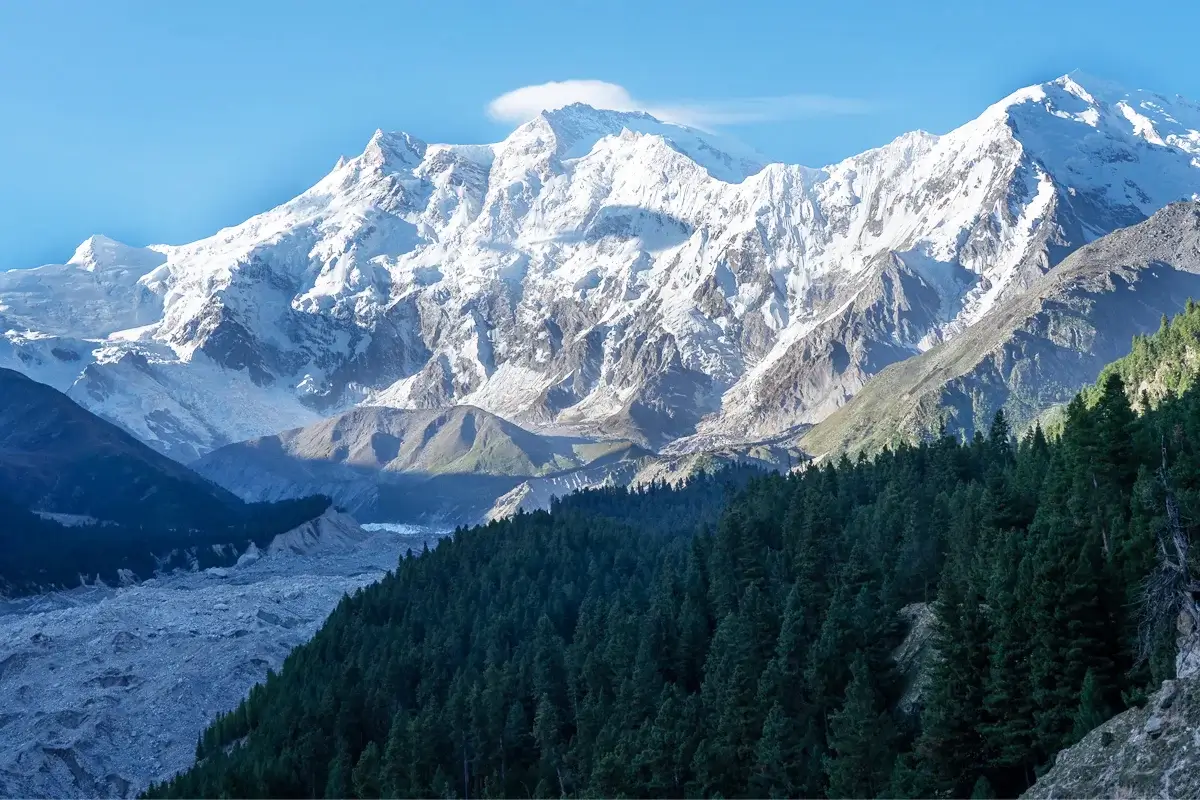
Walking in the meadow. Open grassland and pine, with paths in every direction and no particular need to follow one.
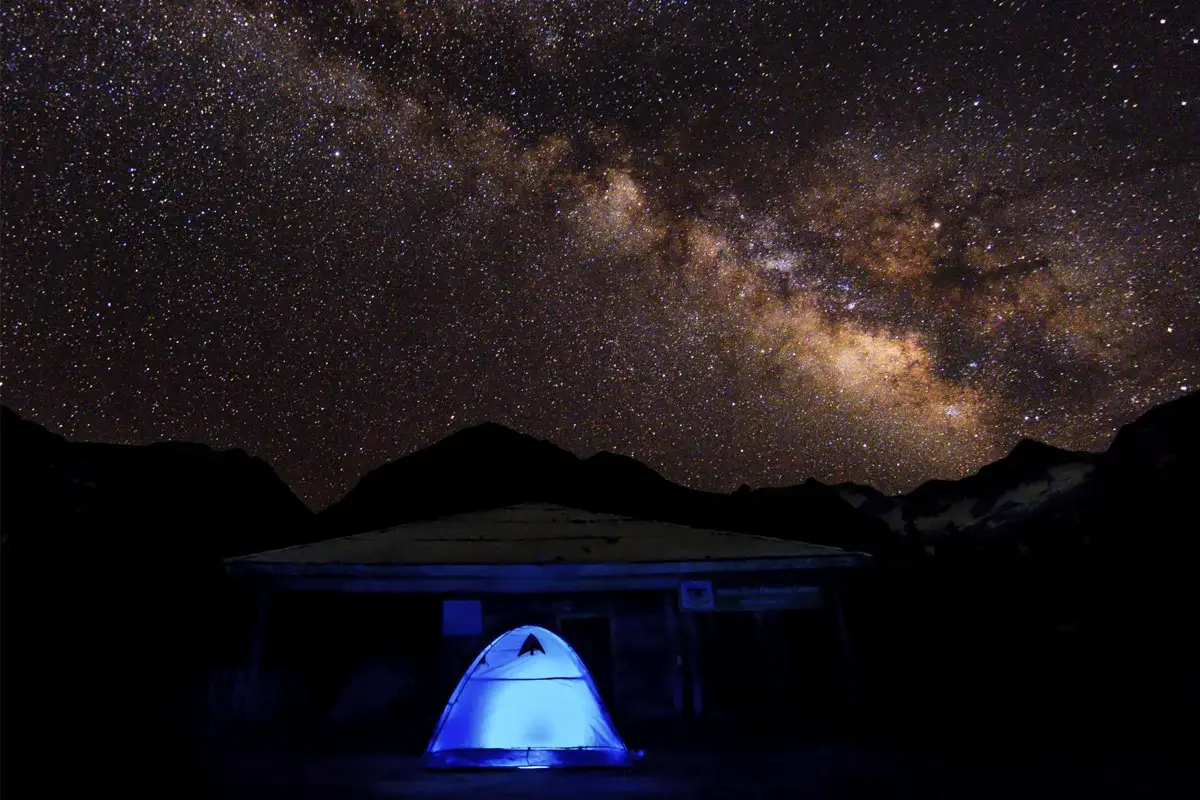
The night sky. There is no mains electricity here. On a clear night that is worth staying up for.
What tends to disappoint
Cloud. Nanga Parbat is often hidden, sometimes for a whole visit. Nobody can promise you the view, and an operator who does is guessing. The facilities. Huts are basic, hot water is inconsistent, and the toilets are simple. Peak-season crowds. The meadow in August is busier than the photographs suggest, and the jeep queue at Raikot Bridge can be long.
Beyal Camp and Nanga Parbat Base Camp
Two walks from the meadow, and the reason many people come.
Beyal Camp, about 3,500 m. Roughly two hours further up from the meadow, closer to the mountain and considerably quieter. Four to five hours return on an easy gradient through pine and open meadow.
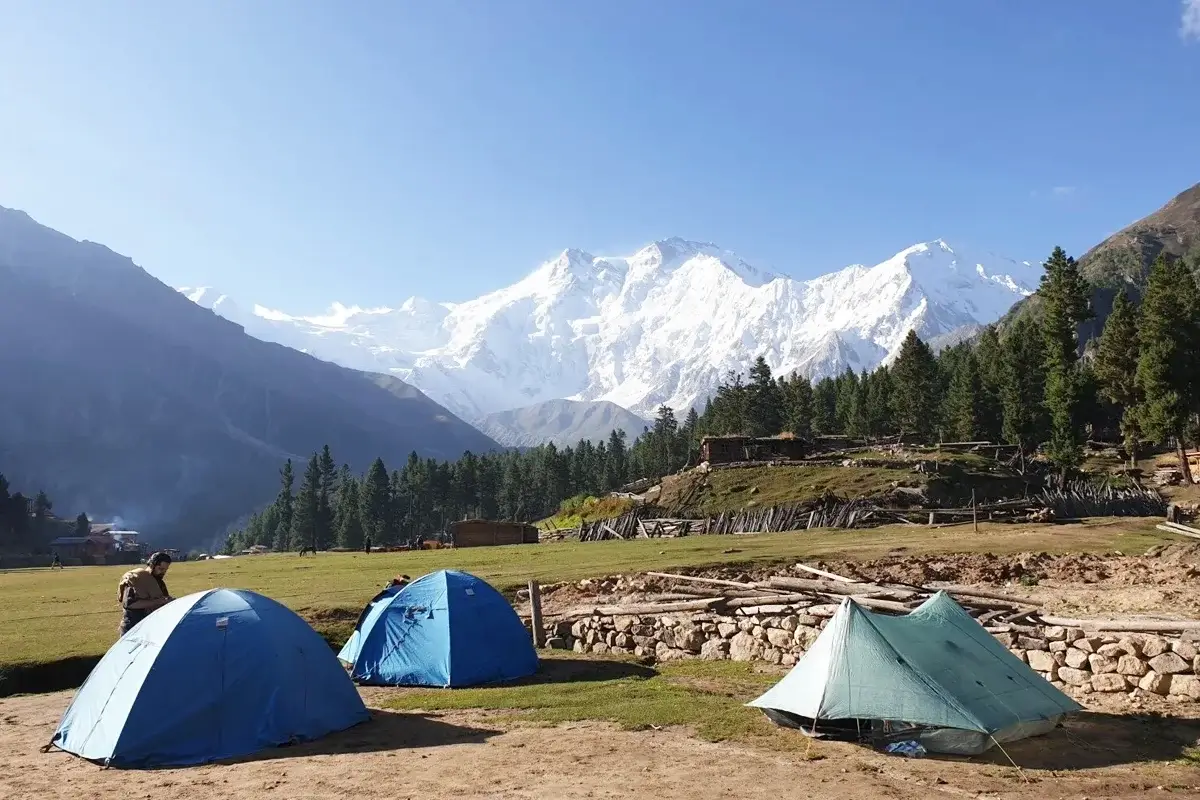
The Nanga Parbat viewpoint, about 4,000 m. Beyond Beyal, overlooking the Raikot glacier. A full day from the meadow and back, and the closest most visitors get to an 8,000 m peak in Pakistan. It needs no technical skill and no expedition permit.
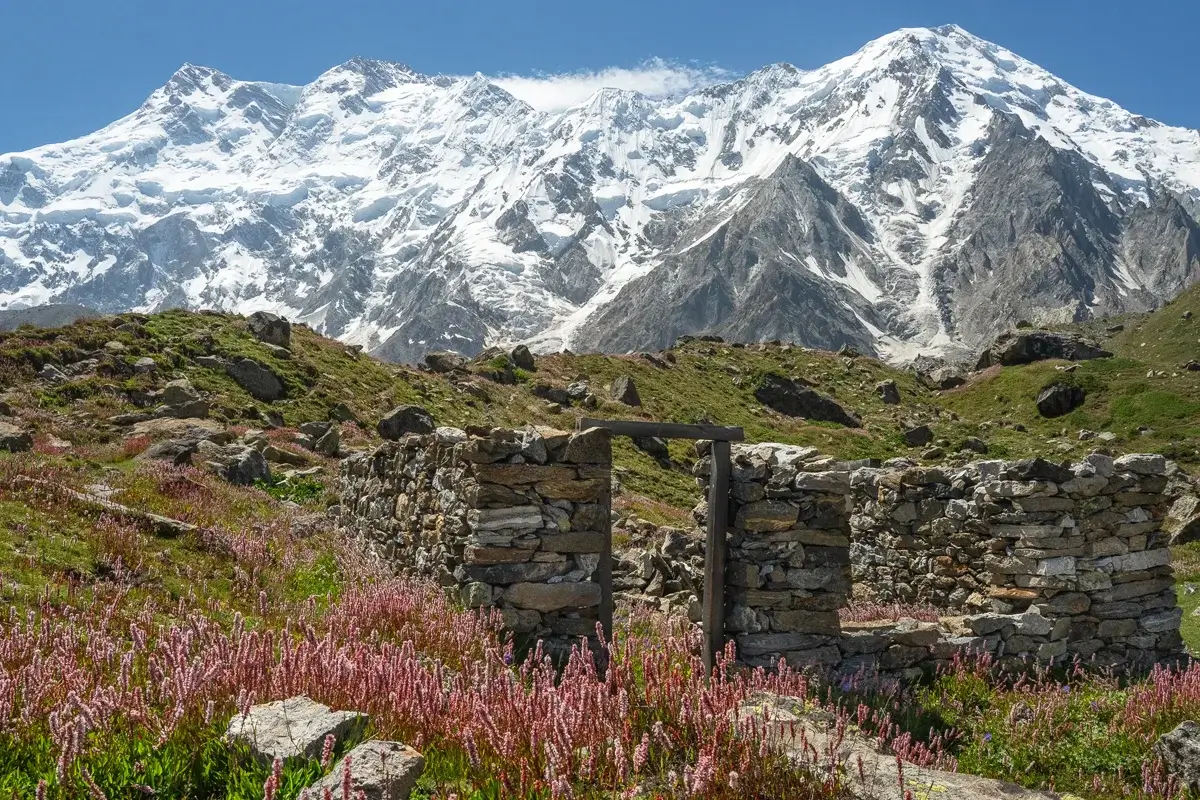
It is still a day above 4,000 metres. Weather changes fast, and turning back is a normal outcome rather than a failure. Any guide who pushes you past that point is the wrong guide.
The realistic alternative to K2
A Baltoro glacier and K2 Base Camp expedition takes eighteen to twenty-two days. The Nanga Parbat viewpoint from Fairy Meadows is a day walk on a four or five day trip.
For anyone who wants to stand below an 8,000 m peak but cannot give three weeks to it, this is the answer. We run it as a guided package.
Where to stay
Accommodation at Fairy Meadows is wooden huts, cottages and tented camps. There is nothing above that standard and there will not be, because everything here has been carried or led up the path from Tato.
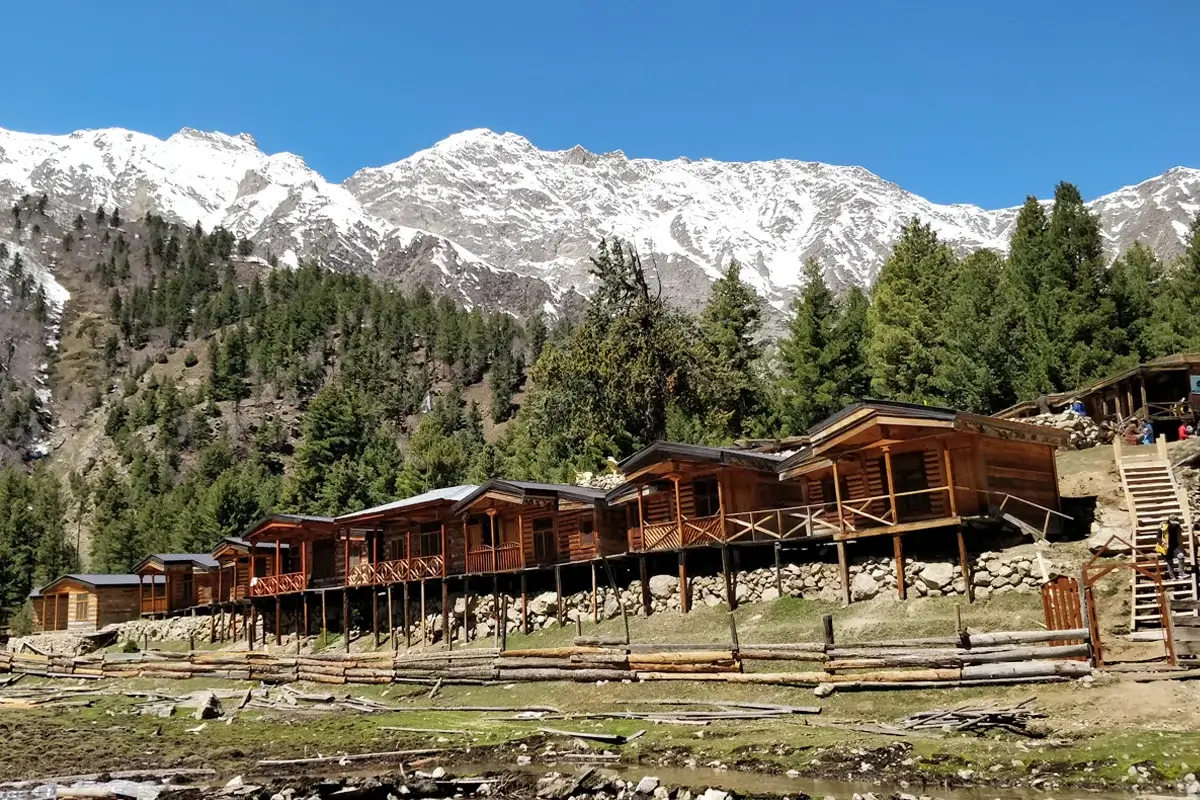
What that means in practice: expect a bed, blankets, a basic bathroom and generator power for a few hours in the evening. Bring a torch and a power bank.
Book ahead for July and August. Capacity at the meadow is genuinely limited and it fills. Four to six weeks is the usual lead time; turning up without a booking in peak season can mean sleeping in a tent or walking back down.
Best hotels and huts in Fairy Meadows
Practical notes
Mobile signal. None at the meadow. Patchy at Tato. Tell people at home you will be uncontactable for the duration.
Electricity. Generator or solar, usually a few hours in the evening. Charge everything before you leave the Karakoram Highway.
Cash. No ATM anywhere near. Carry everything you need, including the jeep fare and horse hire, in cash.
Cold. Nights at 3,300 m are cold even in July. Bring a warm layer regardless of the month.
Altitude. The meadow itself affects few people. The viewpoint at 4,000 m affects more. Go slowly and drink more water than feels necessary.
Luggage. Take a day bag up and leave the rest in the vehicle at Raikot Bridge, or hire a porter at Tato. You do not want a suitcase on that path.
Is Fairy Meadows safe?
Fairy Meadows is visited by large numbers of Pakistani and international travellers every season without incident, and the practical risks are environmental rather than anything else.
- The jeep track. Narrow with unprotected drops. Local drivers only, and they know it. Do not attempt it in your own vehicle.
- Altitude. 3,300 m at the meadow, 4,000 m at the viewpoint. Ascend slowly.
- Weather. Conditions change fast above the meadow. Turn back if visibility drops.
- Medical facilities. None at the meadow. The nearest are hours away, and evacuation means the walk down and then the jeep track. Carry a first-aid kit and any medication you need.
- Cold. Hypothermia is a real risk for anyone caught out above Beyal in bad weather without layers.
On the history, since anyone researching this area will find it: there was an attack on a mountaineering camp on the Nanga Parbat side in 2013 in which foreign climbers were killed. Security in the area was substantially increased afterwards, and the years since have passed without a recurrence. The region receives international visitors routinely today.
Foreign nationals should check their own government's current advisory, which may treat Gilgit-Baltistan differently from the rest of Pakistan. Read the region-specific detail rather than the country headline.
Combining Fairy Meadows with Hunza
Raikot Bridge sits on the Karakoram Highway between Chilas and Gilgit, which puts Fairy Meadows directly on the route north. Adding it to a Hunza trip costs two or three days and no backtracking at all.
This is the single most sensible combination in northern Pakistan and most itineraries miss it. If you are already driving to Hunza, you pass the turn-off.
Frequently asked questions
Is there a road to Fairy Meadows?
No. The jeep track ends at Tato village and the last three kilometres are on foot or by horse. No vehicle reaches the meadow.
How dangerous is the Fairy Meadows jeep track?
It is narrow, unpaved and has unprotected drops, and it frightens a proportion of visitors. It is driven only by local drivers who run it several times daily through the season, and the safety record is good. You cannot use your own vehicle.
How much does the jeep cost?
Around PKR 20,000 per vehicle, a fixed rate set by the local drivers' association at Raikot Bridge. It is charged per vehicle rather than per person and is included in our packages.
How long is the walk from Tato?
Three to four kilometres, two to three hours uphill depending on fitness. Horses and porters are available at Tato at around PKR 10,000 if you would rather not walk.
Can elderly people or children reach Fairy Meadows?
Children walk it routinely. Older visitors manage it at their own pace or on horseback. Anyone who cannot walk uphill for two to three hours and does not want to ride will not be able to reach the meadow.
When does Fairy Meadows open?
Roughly May to September, depending on snow. The track is closed and the huts shut through winter. September gives the clearest mountain visibility. Confirm before travelling.
How many days do I need?
Two nights minimum. Three if you want to walk to Beyal Camp and the Nanga Parbat viewpoint. A single night is not worth the journey.
Will I definitely see Nanga Parbat?
No. The mountain is frequently in cloud and can stay hidden for an entire visit. Staying two or three nights improves your chances considerably; anyone guaranteeing the view is guessing.
Is there mobile signal or electricity?
No signal at the meadow. Electricity is generator or solar for a few hours in the evening. Bring a torch and a power bank, and charge everything before you leave the highway.
How difficult is the Nanga Parbat viewpoint walk?
A full day from the meadow and back, reaching about 4,000 m. No technical skill or expedition permit required, but real fitness and layers. Beyal Camp at about 3,500 m is the shorter alternative at four to five hours return.
How much does a Fairy Meadows trip cost?
From USD 400 per person for a five-day guided trip from Islamabad with a minimum of two travellers, including transport, the jeep stage, hut accommodation and meals. The jeep fare is fixed by the local drivers' association.
Can I combine Fairy Meadows with Hunza?
Yes, and you should. Raikot Bridge is on the Karakoram Highway on the way to Hunza, so adding Fairy Meadows costs two or three days and no backtracking.
Planning a Fairy Meadows trip?
We run 3 to 5 day trips from Islamabad and Lahore, with transport to Raikot Bridge, the jeep stage arranged, hut accommodation booked, and guided walks to Beyal Camp and the Nanga Parbat viewpoint.
See Fairy Meadows tour packages Message us on WhatsApp
Related: Things to do in Fairy Meadows · Where to stay · Hunza travel guide · All destinations
Last updated: 20 August 2026 · Written and verified by our Gilgit-Baltistan operations team, Pakistan Tour Maker.
Pakistan Tour Maker is the international division of Click Pak Tourism Services, a Government of Pakistan licensed tour operator (Licence No. 9780), operating since 2013.